Person

Global Traceability Framework For Beef and Leather

Global Traceability Framework For Beef and Leather

Global Traceability Framework For Beef and Leather

A Common Language for Transparent, Trusted Supply Chains

Background

Background

Rising Expectations for Complex Supply Chains

Rising Expectations for Complex Supply Chains

Cattle production is a major driver of land-use change and a leading contributor to deforestation and habitat conversion, particularly in tropical regions.At the same time, expectations for transparency are rising fast. Consumers, regulators, and buyers increasingly require proof of origin and responsible sourcing.

Why Proving Deforestation-Free Sourcing Is So Hard

Many brands have responded with tools like supply chain mapping. While helpful, these approaches do not deliver full visibility of the journey of a particular product. Beef and leather supply chains remain fragmented, with inconsistent practices and siloed data, making it difficult to:


  • Substantiate sustainability and ESG claims

  • Identify and manage deforestation and human-rights risks

  • Build trust with consumers and downstream buyers


Without standardized traceability, data cannot move across systems—and claims cannot be

reliably verified.


The Missing Piece: Standardization

Across the industry, multiple tools, certifications, and digital systems exist. But without a shared data model defining what data should be captured, how it should be formatted, and how it should be exchanged, traceability remains fragmented. Interoperability requires both digitization and alignment.

Many brands have responded with tools like supply chain mapping. While helpful, these approaches do not deliver full visibility of the journey of a particular product. Beef and leather supply chains remain fragmented, with inconsistent practices and siloed data, making it difficult to:


  • Substantiate sustainability and ESG claims

  • Identify and manage deforestation and human-rights risks

  • Build trust with consumers and downstream buyers


Without standardized traceability, data cannot move across systems—and claims cannot be reliably verified.


The Missing Piece: Standardization

Across the industry, multiple tools, certifications, and digital systems exist. But without a shared data model defining what data should be captured, how it should be formatted, and how it should be exchanged, traceability remains fragmented. Interoperability requires both digitization and alignment.

Many brands have responded with tools like supply chain mapping. While helpful, these approaches do not deliver full visibility of the journey of a particular product. Beef and leather supply chains remain fragmented, with inconsistent practices and siloed data, making it difficult to:


  • Substantiate sustainability and ESG claims

  • Identify and manage deforestation and human-rights risks

  • Build trust with consumers and downstream buyers


Without standardized traceability, data cannot move across systems—and claims cannot be reliably verified.


The Missing Piece: Standardization

Across the industry, multiple tools, certifications, and digital systems exist. But without a shared data model defining what data should be captured, how it should be formatted, and how it should be exchanged, traceability remains fragmented. Interoperability requires both digitization and alignment.

The Solution

The Solution

The Solution

A Harmonized Framework for Traceability

A Harmonized Framework for Traceability

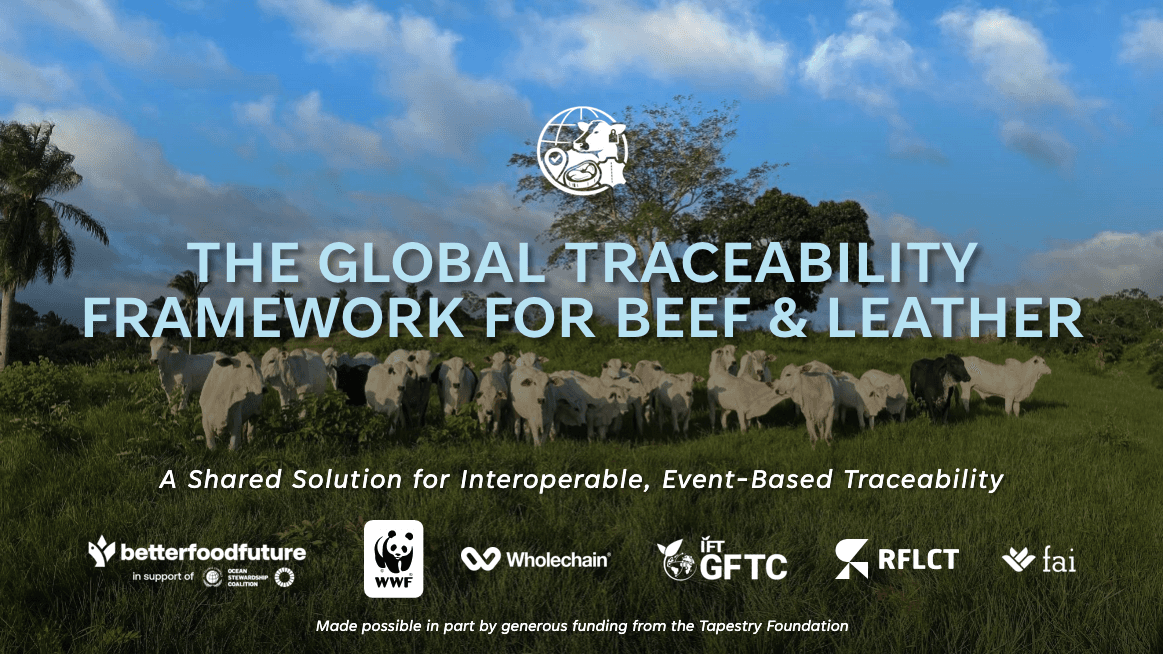
The Global Traceability Framework for Beef and Leather provides a shared foundation for how traceability data is captured and exchanged, so systems can work together across companies and geographies.


It is built on three core elements:


  • Event-based traceability: Captures who, what, when, and where at every Critical Tracking Event (CTE), using agreed-upon Key Data Elements (KDEs).

  • Global standards foundation: Built on GS1 EPCIS, the world’s most widely used standard for event-based traceability.

  • Cross-commodity alignment: Leverages EPCIS implementations already used in sectors like seafood and pharmaceuticals, supporting scalable, cross-industry adoption.


The Framework offers a practical path forward: interoperable traceability that supports compliance, credible claims, and long-term industry alignment.


Who the Framework Is For


The Framework is designed for organizations across beef and leather supply chains, including:


  • Brands and downstream buyers seeking credible, verifiable sourcing data

  • Producers, processors, and suppliers responsible for capturing traceability data

  • Technology providers building interoperable traceability solutions

  • Industry groups, NGOs, and regulators working to align expectations and requirements


Each actor retains control of their data, while contributing to a shared, system-wide

view of traceability.


Who the Framework Is For

The Framework is designed for organizations across beef and leather supply chains, including:


  • Brands and downstream buyers seeking credible, verifiable sourcing data

  • Producers, processors, and suppliers responsible for capturing traceability data

  • Technology providers building interoperable traceability solutions

  • Industry groups, NGOs, and regulators working to align expectations and requirements


Each actor retains control of their data, while contributing to a shared, system-wide view of traceability.


Who the Framework Is For


The Framework is designed for organizations across beef and leather supply chains, including:


  • Brands and downstream buyers seeking credible, verifiable sourcing data

  • Producers, processors, and suppliers responsible for capturing traceability data

  • Technology providers building interoperable traceability solutions

  • Industry groups, NGOs, and regulators working to align expectations and requirements


Each actor retains control of their data, while contributing to a shared, system-wide view of traceability.

Join the Global Traceability Framework

Join the Global Traceability Framework

Interested in adopting the Framework, participating in pilots, or contributing to its ongoing development?

Contact us: beef.leather@betterfoodfuture.org


Connect with peers and stay updated on pilots, events, and learnings.
Resources

Resources

GTFBL Overview

A concise overview of the Framework and why it matters

Frequently Asked Questions (FAQs)

Common questions about the Framework, scope, and participation
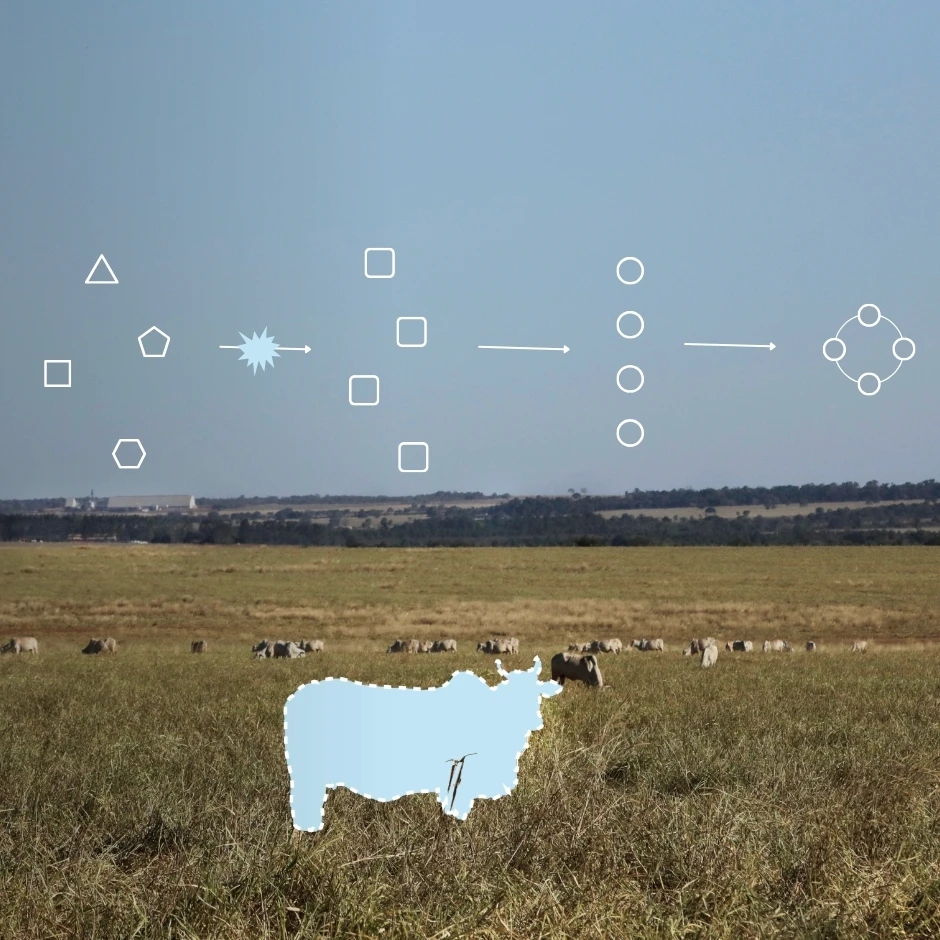
The Global Traceability Framework for Beef and Leather

Full framework requirements, data standards, and guidance

Technical Resources: Technology Explainer

A high-level overview of the types of technology that support digital traceability
Technical Resources: Making Traceability Work – Part 1

A basic introduction to applying data standards in beef and leather supply chains
Technical Resources: Making Traceability Work – Part 2

Technical application of data standards in beef and leather supply chains
Acronyms, Abbreviations & Key Terms

A reference glossary defining core traceability terminology used across GTFBL resources, intended for both technical and non-technical audiences

Implementation Guidance: The GTFBL

Stepwise implementation resource to help stakeholders understand where to start and how to implement

Implementation Guidance: Event-Based Traceability Explainer

An educational resource introducing the GTFBL’s event-based traceability approach
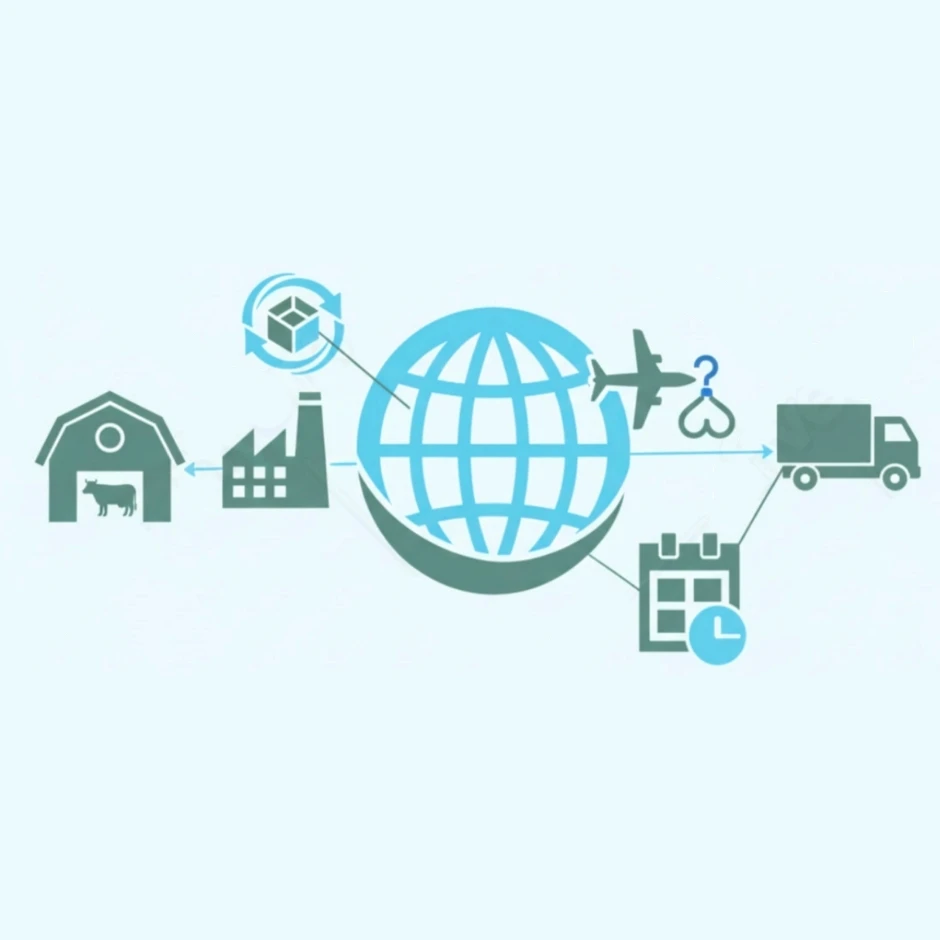
Implementation Guidance: Standardization & Interoperability Guide

Interoperability concepts, the role of data digitization, and the benefits of standardized data exchange

Developer Resources: General Developer Documentation

A technical resource hub and knowledge repository that guides IT and software teams on how to implement the Framework

Webinars & Events
Webinars & Events

Webinars & Events

See where we’ve been lately

See where we’ve been lately

Better Food Future: Cattle Traceability Launch & Roadmap

Virtual event held in March 2025 to launch the GTFBL and share with stakeholders a roadmap toward the global data standard for DCF cattle
American Apparel & Footwear Association (AAFA) Traceability & Sustainability Conference

WWF, IFT, and Tapestry co-presented on the panel, Trace It To Change It: Rethinking Leather Traceability, moderated by AAFA
Textile Exchange Conference 2025 Side Meeting

Virtual event held in March 2025 to launch the GTFBL and share with stakeholders a roadmap toward the global data standard for DCF cattle

Digital Futures: A Better Food Future Celebration at Climate Week NYC 2025

Panelists discussed the GTFBL, how traceability in the supply chain matters, and how institutions can support the roll-out of better data and technology
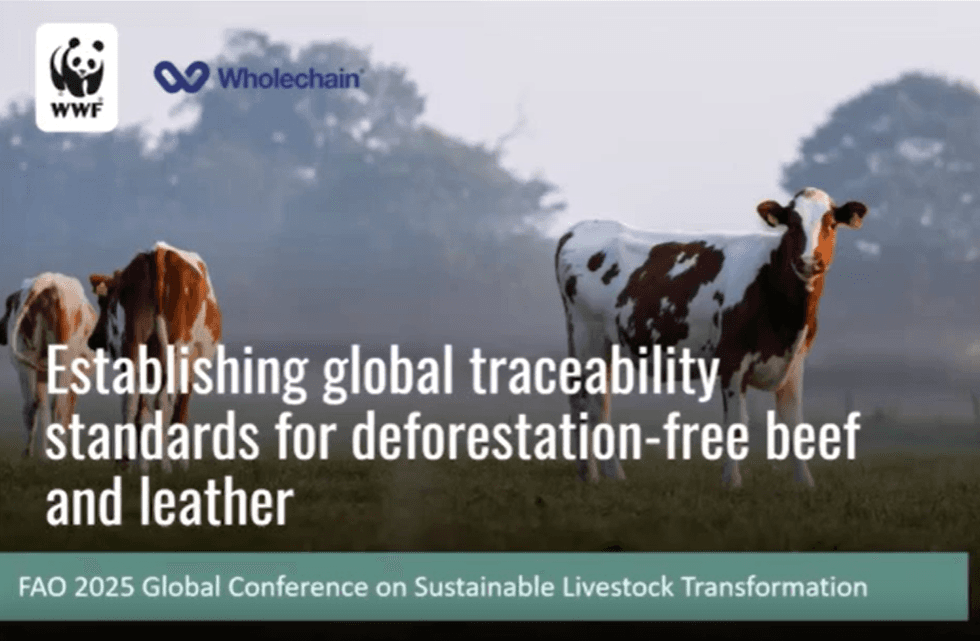
Better Food Future: Establishing Global Traceability Standards For Deforestation-Free Beef And Leather

Side event at the FAO Global Conference on Sustainable Livestock Transformation 2025
Feature title.

This is a feature description spanning a couple of lines.

Timeline

Timeline

Timeline

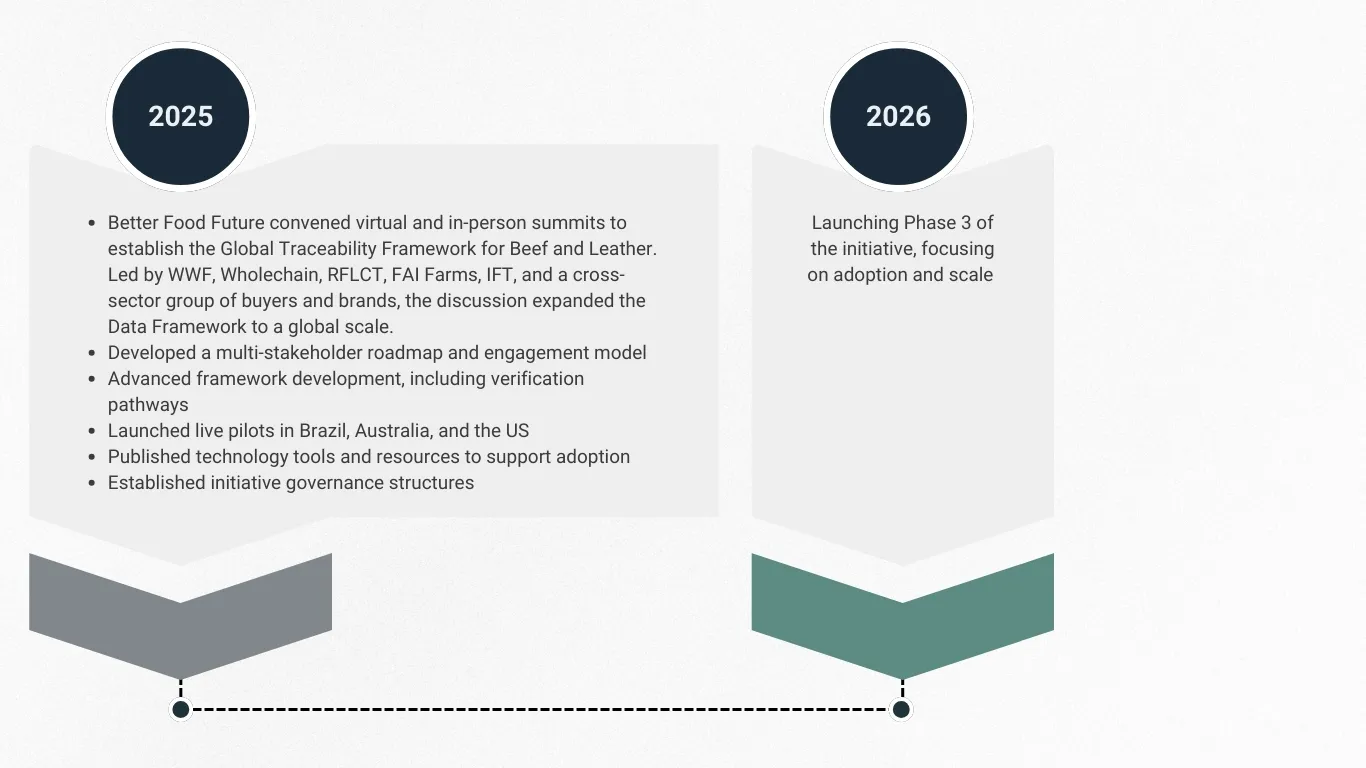
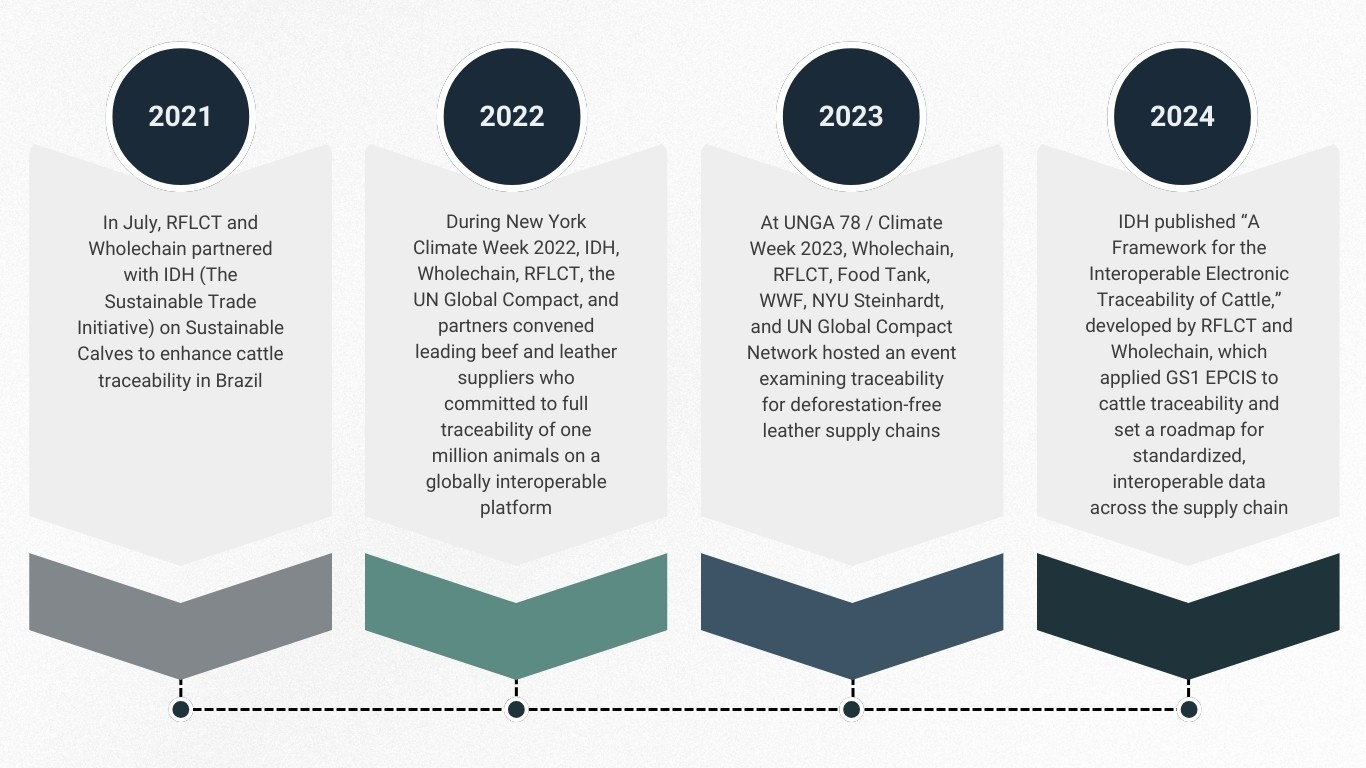
Framework Timeline

Framework Timeline

Stay Informed, Stay Ahead.

Stay Informed, Stay Ahead.

Stay Informed, Stay Ahead.

Join our newsletter for the latest updates on events, insights, and sustainability initiatives.

Join our newsletter for the latest updates on events, insights, and sustainability initiatives.